Following last month's blog on concussion (which can be found here) there have been a few interesting articles popping up over the internet:
Showing posts with label injury. Show all posts
Showing posts with label injury. Show all posts
Wednesday, 6 November 2013

Thursday, 17 October 2013
Concussion in dance and aesthetic sports
Concussion, also referred to as minor traumatic brain injury (mTBI), is an injury more commonly associated with contact sports than with dancing. There has however been an increase in recent years in the number of reported concussions in dancers, and it is necessary for the dance teacher, director, choreographer and dancers themselves to be able to recognise and react to a concussion when it occurs.
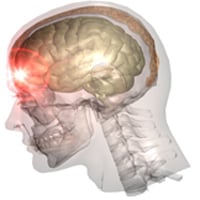
In aesthetic sports such as gymnastics and cheerleading, and in dance related genres such as physical theatre, the reported instances of concussion are significantly higher than in dance, largely due to moves performed while elevated and in performing tricks and stunts. In cheerleading, stunts are responsible for 90% of the concussions suffered by athletes, with the majority of these affecting the bases, rather than the athlete in the air. Across various genres of dance, from street to ballroom to contemporary to lindy-hop, numerous aspects of choreography can pose a risk to dancers if not executed properly. With dance choreography constantly pushing new limits of dancers' physical abilities, and increasingly incorporating tricks and stunts in pieces, it is useful to now consider dance alongside gymnastics and cheerleading as an activity carrying the potential for concussion.
In a wide variety of sports, it has been found that concussion is under-reported, and that athletes go on to perform or compete after sustaining a head injury. It is imperative for the safety of the dancer or athlete that all concussions are recognised and appropriately addressed. Self-reporting of symptoms has been proven to be ineffective at identifying concussion, and so standardised testing procedures should be in place to ensure concussions are identified and appropriately addressed.
Friday, 20 September 2013
Flexibility training - is it necessary?
Flexibility training can be divisive issue. Even I'm divided on it. On the one hand, you can improve your flexibility levels to a degree through appropriate training (stretching) methods. On the other, the gains you can make are somewhat limited, and I'll often argue largely outweighed by the likelihood of injury (up to 80% of dance injuries are sustained during flexibility exercises. That's an awful lot.).
Having spent the better portion of my life in dance training and surrounded by other dancers, I can honestly say I've seen a LOT of time wasted on flexibility training for next to no gains. 85% of your flexibility is down to your skeletal structure, 5% is down to environmental circumstances, leaving only 10% down to muscular elasticity. 10%. All those hours spent trying to push that little bit further, and the best you can hope for is 10%.
Having spent the better portion of my life in dance training and surrounded by other dancers, I can honestly say I've seen a LOT of time wasted on flexibility training for next to no gains. 85% of your flexibility is down to your skeletal structure, 5% is down to environmental circumstances, leaving only 10% down to muscular elasticity. 10%. All those hours spent trying to push that little bit further, and the best you can hope for is 10%.
Wednesday, 29 May 2013
Staying active during injury recovery
First up before I say anything else - speak to your doctor/physio/surgeon before you go hell for leather into any training routine while you're injured. The last thing you want to do it prolong your recovery or worsen your existing injury. Also, there are times when giving your body a break for at least a couple of weeks might actually be the best thing for it. Speak to your doctor, assess your situation and make your decision.
Training when you're injured can have a lot of benefits if you do it safely; it can slow muscle atrophy if you have limb immobilied, maintain your existing fitness levels, or at least prevent them from dropping too far, and can lessen the psychological impacts of injury. Unfortunately if you're injured and want to stay active, you may have to accept that you won't be dancing for a while. This doesn't mean you can't work on specific aspects of technique or fitness, just be smart about it. Any time I've injured myself I've found boredom and frustration can be one of the worst aspects so finding a way to stay motivated and at least maintain a basic level of activity feels better than nothing.
Training when you're injured can have a lot of benefits if you do it safely; it can slow muscle atrophy if you have limb immobilied, maintain your existing fitness levels, or at least prevent them from dropping too far, and can lessen the psychological impacts of injury. Unfortunately if you're injured and want to stay active, you may have to accept that you won't be dancing for a while. This doesn't mean you can't work on specific aspects of technique or fitness, just be smart about it. Any time I've injured myself I've found boredom and frustration can be one of the worst aspects so finding a way to stay motivated and at least maintain a basic level of activity feels better than nothing.
Monday, 15 April 2013
An overview of injury in dance
Dance medicine and science practitioners focus predominantly on three interlinked areas - injury prevention, healthier dance practice and the development of peak performance. When working towards these goals, it can be useful to take a step back and consider the extent of the healthcare issues facing dancers that must be addressed. Injury is the key factor in this, as neither healthy dance practice and peak performance cannot be achieved without addressing the significant problem of injury occurence in the dance profession.
Instances of injury are excessively high in the dancers. Across all disciplines of dance musculoskeletal injury is common in both student and professional dancers. Pushing the body to it's limits and the evolution of evermore demanding choreography means that dance will always be a risky profession; this does not mean however that steps cannot be taken to reduce the risk.
Collecting data on dance injury can be problematic due to dancers often being reluctant to report physical problems to directors or company doctors out of fear of losing professional position or opportunity. Therefore in many studies on dance injury, anonymous self-reporting has proven more useful than company medical records, as is the case with the studies discussed below. The extent of the problem, when providing the security of anonymity to dancers, is shown to be much wider than official company records state. What follows is a brief overview of the issue according to published research.
Instances of injury are excessively high in the dancers. Across all disciplines of dance musculoskeletal injury is common in both student and professional dancers. Pushing the body to it's limits and the evolution of evermore demanding choreography means that dance will always be a risky profession; this does not mean however that steps cannot be taken to reduce the risk.
Collecting data on dance injury can be problematic due to dancers often being reluctant to report physical problems to directors or company doctors out of fear of losing professional position or opportunity. Therefore in many studies on dance injury, anonymous self-reporting has proven more useful than company medical records, as is the case with the studies discussed below. The extent of the problem, when providing the security of anonymity to dancers, is shown to be much wider than official company records state. What follows is a brief overview of the issue according to published research.
Thursday, 14 March 2013
Nutrition and Injury Recovery
I'm currently typing this one-handed, sitting banged up at home with my first serious injury in about 4 years. I dislocated my elbow at the start of the week and will be spending the foreseeable future in the world's least stylish full-arm cast and not lifting anything heavier than a teacup. Awesome. So it seems as good a time as any to discuss options for injury rehab, recovery nutrition and finding some way to not just bow down and give up for several weeks.
Friday, 22 February 2013
Research Update: Vitamin D status in ballet dancers
A new study carried out by Roger Wolman of the Royal National Orthopaedic Hospital in Stanmore, along with colleagues at the University of Wolverhampton, has looked at the vitamin D status of professional ballet dancers in winter vs summer months.
The 6 month cohort study contrasted high sunlight months (summer) against low sunlight months (winter). The study looked at 19 professional ballet dancers within the UK and considered their vitamin D status through serum 25-hydroxyvitamin D levels within the body, as well as recording parathyroid hormone (PTH) and blood serum bone turnover markers (CTX and PINP). The dancers all danced 6-8 hours a day, for 38 hours a week. The Company's doctors recorded injury instance over the 6 month period.
Significant differences were found in levels of serum 25-hydroxyvitamin D, PTH and blood serum bone turnover markers between summer and winter months. Although levels of 25-hyrdoxyvitaminD were higher in summer months, only 3 of the 19 dancers achieved "sufficient" levels during the summer period, with the rest being considered either insufficient or deficient in vitamin D. All dancers' vitamin D levels were found to be insufficient or deficient in winter months.
 |
| (c) Koji Aoki |
Significant differences were found in levels of serum 25-hydroxyvitamin D, PTH and blood serum bone turnover markers between summer and winter months. Although levels of 25-hyrdoxyvitaminD were higher in summer months, only 3 of the 19 dancers achieved "sufficient" levels during the summer period, with the rest being considered either insufficient or deficient in vitamin D. All dancers' vitamin D levels were found to be insufficient or deficient in winter months.
Thursday, 21 February 2013
The importance of dance-specific medical practitioners
If you're a dance student, working freelance, part-time or recreationally, or indeed if you're aligned to a company that does not have it's own physio, podiatrist or osteopath, you've probably had some mixed experiences going to see medical practitioners about dance related injuries. In the UK we're lucky enough to have the NHS, meaning we don't have to pay to see a specialist. The downside of this is we usually don't get to pick who we see.
Tuesday, 19 February 2013
Overtraining
Overtraining or burnout refer to a condition where athletes or dancers note a marked decrease in physical performance for no apparent physical or medical reason, suffer from prolonged fatigue and display behavioral and emotional changes. Symptoms of overtraining will vary from individual to individual, the most common symptoms include:
- Increased perception of effort during exercise
- Excessive sweating
- Frequent upper respiratory tract infections
- Breakdown of technique
- Muscle soreness
- Sleep disturbance
- Lack of concentration
- Loss of appetite
- Mood disturbances
- Signs of depression
- Decreased interest in training and performance
- Decreased self-confidence
Monday, 11 February 2013
Working with recreational dancers
Working with recreational community dance groups poses a different set of considerations in class planning. Instead of working with a known quantity, you never know how many dancers you will have; what level of fitness they are at or what level of technique, if any, they have. It can make planning sessions and creating choreography tricky at best. You can have individuals brand new to exercise in with semi-professional dancers, or people who have trained to a high level alongside people with reasonable levels of fitness but absolutely no technical knowledge. Fitness and technical skill can vary wildly, and your job is to find a means of providing a diverse population with a useful, enjoyable and fulfilling class.
Monday, 4 February 2013
Female Athlete Triad in dancers
I want to talk about the Female Athlete Triad in dancers because it's horrendously common and is one of those subjects that is rarely acknowledged or discussed openly in dance communities. The Triad is a trio of interrelated pathologies - low energy intake, amenorrhea and osteoporosis. It's a condition that can appear in women participating in any athletic activity, but is most common in those that emphasise a low body fat percentage - dancers, gymnasts and distance runners.
Monday, 28 January 2013
Injuries and dancing
Injuries happen, it's a fact of life. Studies have shown that in any given year up to 90% of professional dancers will sustain an injury that makes them lose time from work (it makes for some disheartening reading, but have a look - JDMS study CJSM study SJMSS study and MPPA study). That's a lot of injuries in a lot of dancers. Yes we can do our best to prevent them and we should, because it's possible to reduce the instances of injury and that should be a priority for all of us. However injuries happen in any activity where you are pushing your body to it's limits, and when they do we still need to be able to get on with our lives.
Monday, 21 January 2013
Tradition and Authority
The tradition of respect for authority in classical dance is, in many ways, a great thing. It is a respect for wisdom, experience and the years of dedication in others that has built the art form into what it is today. In children it develops respect for elders, for teachers, for knowledge, it encourages self-discipline and self-control. However I truly believe respect is something that should always be earned. Whether in your personal or professional life, whether it is your boss, your teacher, your coach, your partner, there is no entitlement in respect.
Monday, 14 January 2013
Over-pronation of the feet
A degree of pronation is normal, as the foot needs to adapt to contact with the ground, however over-pronation occurs when the arch of the foot excessively flattens or 'collapses', the heel rolls inward and the soft tissues stretch. This is a common problem in dancers of many genres including jazz, modern and theatrical dance, but the problem is most pronounced in ballet dancers.
Wednesday, 2 January 2013
Strength Training - a note on pas de deux and partnering
This isn't specific to ballet - this is for anyone whose dance style incorporates lifts of any type, whether it's ballet, street, contemporary or lindy hop, ANY style where you are taking someone's weight increases your risk of hurting yourself if you're not careful. It should be pretty self evident that if you're lifting a person, you're going to need the strength to take their weight. You won't get that strength from practicing the lift a few times in rehearsal, you'll get it from strength training outside of the studio.
Aside from the concerns about bulking up, too many female dancers obsess over their weight, at the risk of their health, and avoid weight training themselves due to the worry that it will make them gain weight. Staying at 45kg isn't healthy for the average woman, ballet dancer or not. Too many female dancers control their weight through diet restriction. Get your body fat tested and despite being a size 4, you might be surprised to find it sitting around 20%. Average BF % for female ballet dancers is 17%, for contemporary dancers it's 20%. Compare that with female gymnasts (13%) and runners (14%); the reason it's higher on dancers than other athletes is the lack of strength training and the lack of adequate nutrition.
Aside from the concerns about bulking up, too many female dancers obsess over their weight, at the risk of their health, and avoid weight training themselves due to the worry that it will make them gain weight. Staying at 45kg isn't healthy for the average woman, ballet dancer or not. Too many female dancers control their weight through diet restriction. Get your body fat tested and despite being a size 4, you might be surprised to find it sitting around 20%. Average BF % for female ballet dancers is 17%, for contemporary dancers it's 20%. Compare that with female gymnasts (13%) and runners (14%); the reason it's higher on dancers than other athletes is the lack of strength training and the lack of adequate nutrition.
Monday, 31 December 2012
Going onto pointe
When I was learning to dance I couldn't wait to start pointe work - just like every other girl learning ballet. At my school we were allowed to go on pointe once we got into a certain class (I can't remember which one now, however most of us were between 11-13 years old). It was a rite of passage to start pointe, to get the beautiful, horribly painful shoes and begin weeks of tedious barre work that seemed to go on forever and somewhat killed the romantic notion I had of dancing on my tiptoes. It's such a big step for girls doing ballet that the last thing they're ever going to consider is whether their body is ready for it.
 |
| Ah nostalgia, my first ever pair of Swanildas |
A colleague of mine did her MSc thesis looking at what criteria dance schools used to assess a girl's readiness to begin pointe work. The results were pretty depressing. Nearly every school used age (usually 12) as the determining factor. Some, like mine, used level. Which worked out about the same as age. Almost none even considered strength or physiology.
Subscribe to:
Posts (Atom)